Your Home is a Feeling, Not Just a Place
Let’s be real: your home isn’t just walls & a roof. It’s your personal sanctuary. But getting it to feel right? That’s the hard part. Scrolling through countless interior design ideas might quickly overwhelm you, and when you see your own living room, you may freeze. That feeling is exactly why we built this ultimate Residential Interior Design Guide.
This isn’t about chasing fleeting trends; it’s about understanding home interior design so you can build a home that truly feels like you.
Before the Paint: Finding Your Authentic Home Style
Stop. Before you even think about buying a single pillow, you need to define your personal style. Any good residential interior design guide starts with you, not a catalog. “I love luxury home interiors,” is a simple statement, but what does it actually mean to you? The rich textures? The feeling of space and elegance? Your home interior design must reflect your personality.
- Look Inward: How do you want to feel? Calm and relaxed? Energized and creative?
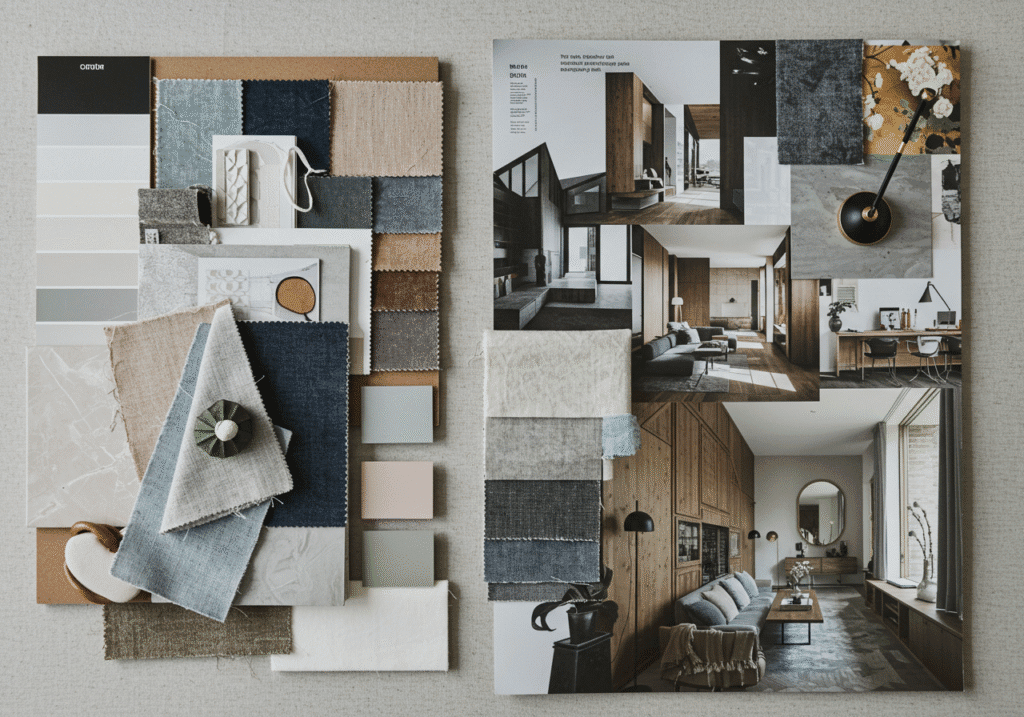
- Create a mood board: This is the fun part. Pin images of anything that gives you that feeling—fashion, nature, art, or travel.
- Identify Themes: Look at your board. See a pattern? You might like the clean lines of modern house interiors, the cozy feel of a rustic farmhouse, or a mix of styles that are all over the place. To help unify these thoughts, a professional color consultation can provide the expert guidance needed to bring the vision together.
This isn’t about fitting in a box. It’s about creating your own.
Your Residential Interior Design Guide to the 7 Pillars of a Beautiful Home
Once you’ve developed your “why” (your look), you require your “how.” These seven principles constitute the “secret sauce” designers employ to ensure a space is absolutely right. These are the most essential interior design tips you’ll ever learn.
- Space & Layout: This is your foundation. Think about “flow.” How do you actually move through the room? Function must come first, especially in small house design, where every inch counts.
- Lighting: It creates the entire ambiance. You need a mix: ambient (your overall lighting), task (directional lighting for reading or cooking), and accent (lighting to highlight artwork or other features).
- Color: Color is pure emotion. A simple palette of three (a dominant, a secondary & an accent) creates harmony.
- Texture & Pattern: It gives a space life. Combine various textures, such as a soft sofa, a thick knit afghan, & a plush velvet pillow, to prevent a one-dimensional appearance.
- Balance: It produces a state of peace. It is either symmetrical (two identical lamps) or off-center (a large chair offset by a pair of petite chairs).
- Scale & Proportion: How things look in proportion to themselves & to rooms. It is never a good idea to have a diminutive rug in a gigantic living space.
- Unity (The “Hook”): It’s the magic that puts it all together. When these things work together cohesively, your home conveys one single beautiful tale.
Smart Design: Budgeting for Beauty & Function
Your home can have a beautiful interior design project without breaking the bank. The secret to long-lasting, affordable home interior design is careful planning.
A Residential Interior Design Guide to Smart Budgeting
- Prioritize: Which room will have the greatest impact on your daily life? Start there.
- Splurge vs. Save: Splurge on the “workhorses“—the items you touch every single day. Your sofa, your mattress, your dining chairs. These are investments in comfort. Reduce costs on the “fluff”—items that are easy to replace, such as pillows, rugs, and accessories.
- DIY & Upcycling: Imaginativeness is what a home interior on a shoestring is about. New paint on an antique or pre-loved piece of furniture can rejuvenate a room for almost no cost. For larger transformations, such as a new build or remodeling, a clear budget strategy is essential to success.
The Big Decision: DIY vs. Hiring an Interior Designer
This is a major crossroad.
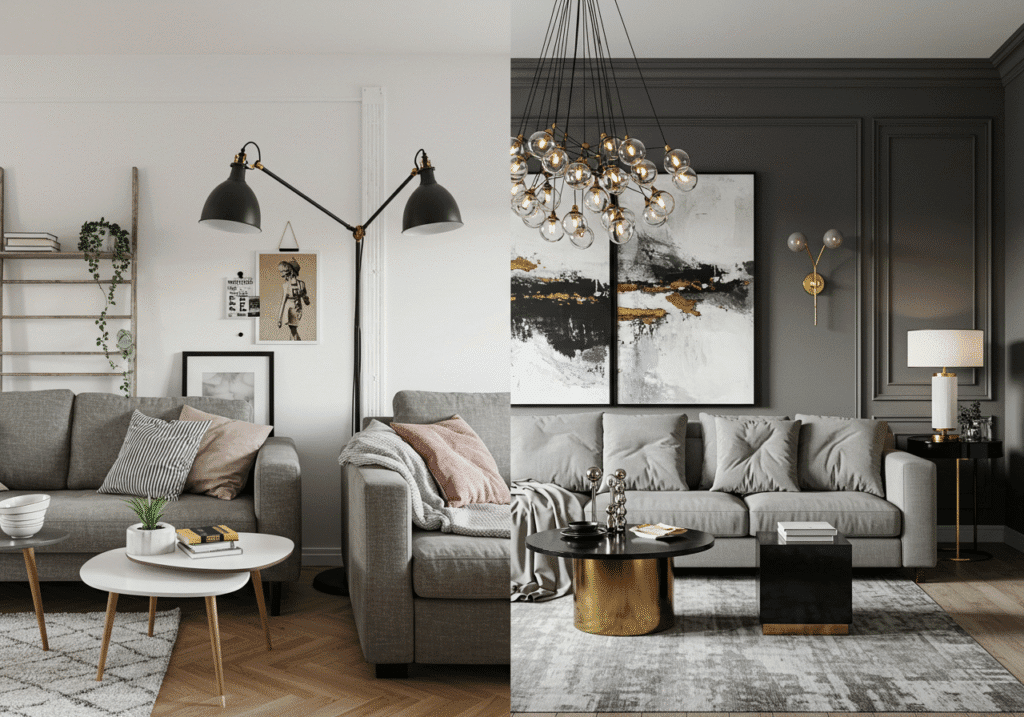
- The DIY Path: This is so rewarding. You have full control. It’s perfect if you’re a person who knows what they want to happen, enjoys doing it, & has lots of time to organize it.
- Hiring a Professional: Feeling overwhelmed? Short on time? A designer is a game-changer. They are trained project managers & problem solvers who can save you from costly mistakes. Our residential full-service interior designIt
is designed to take the weight off your shoulders, while our commercial interior design services extend that same professional precision to business spaces.
Your Home, Your Story
Ultimately, residential interior design is about doing it right, but not perfectly. It’s about building a personal, practical space that accommodates your lifestyle. It’s a process. We hope that with this Residential Interior Design Guide, you’ll have gained the confidence to rely on your instincts and get started creating a home your heart has been dreaming of.
Your tale is worth a beautiful backdrop.
Which area of your home would you most want to renovate? Let us have your thoughts or ideas via the comment box!