
If you live in McLean, VA, you already know that the standard is high. Homes here — from the Tudor estates along Chain Bridge Road to the newer construction near Langley — tend to be large, well-built, and architecturally considered. But ‘well-built’ and ‘beautifully designed’ are two different things, and in 2026, more McLean homeowners than ever are drawing that distinction.
At Statement Design Concepts, we work with homeowners across Northern Virginia, and McLean is one of our most active markets right now. The questions we hear most often are the same ones this post will answer: What design styles are actually working in McLean homes today? What should a renovation cost? And how do you find the right interior designer in McLean, VA, without wasting time on the wrong fit?
What Makes McLean Homes Different in Design
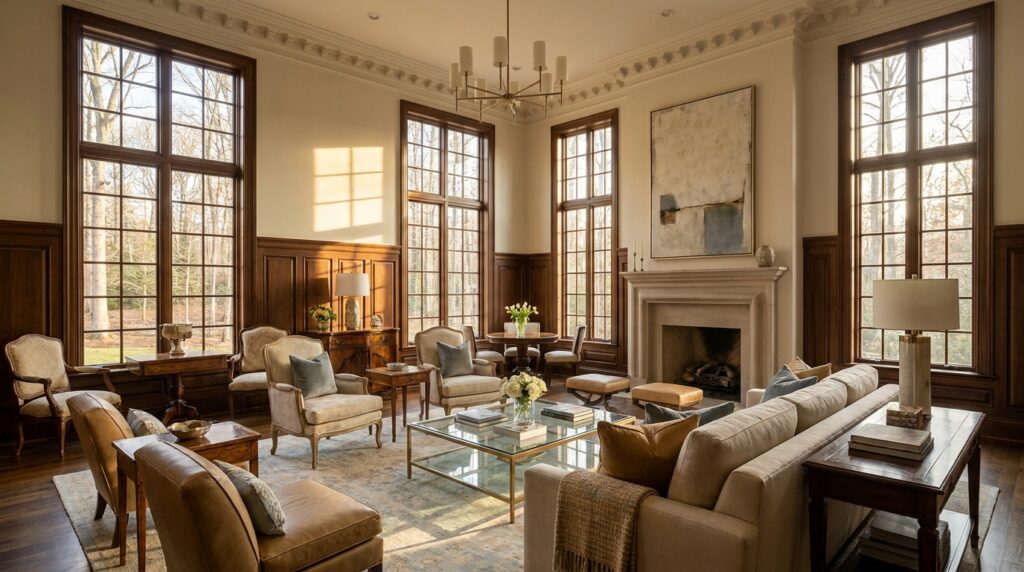
McLean is not a one-size-fits-all market. The housing stock spans several decades and architectural styles—colonial, transitional, contemporary new builds, and custom estates that defy easy categorization. This variety means that effective interior design in McLean requires a reading of the specific home first, not a template applied from outside.
Three characteristics come up across almost every McLean project we work on:
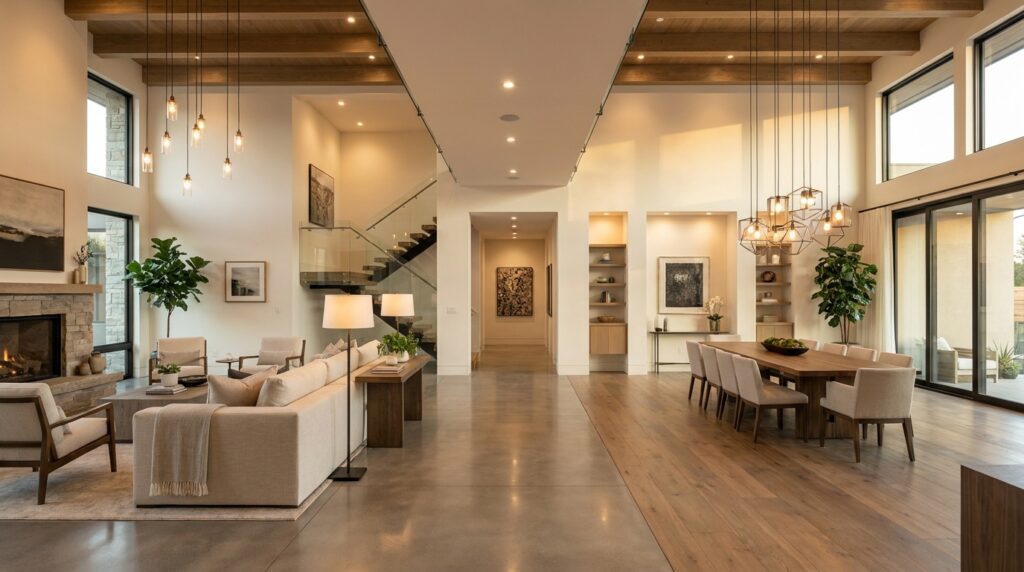
• Large square footage that needs deliberate zoning—open-plan layouts can feel cavernous without considered furniture placement and defined zones for living, dining, and circulation
• High ceilings that demand vertical design thinking—light fixtures, art placement, and drapery heights all behave differently in a room with 10 or 12-foot ceilings
• Formal entertaining rooms that many families no longer use as originally intended—converting a traditional dining room or sitting room into something more functional is one of the most common briefs we receive
Understanding these starting conditions is what separates a designer who knows McLean from one who doesn’t. Local context shapes every decision, from material selection to furniture scale.
The Most Requested Design Styles in McLean Right Now
Design trends in McLean tend to track about 18 months behind the editorial design press—and that’s actually a good thing. By the time a style reaches McLean homeowners, the early-adopter risk is gone, and the execution has matured. In 2026, the styles generating the most interest in our consultations fall into three distinct directions.
Warm Minimalism
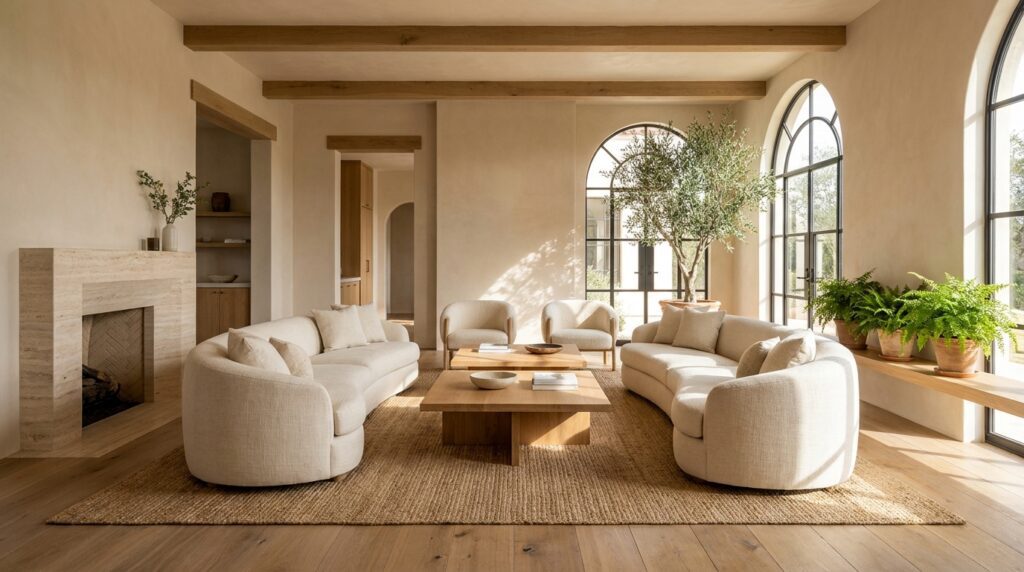
This is the dominant request. Homeowners want clean lines and reduced clutter, but they don’t want cold or stark spaces. The execution typically involves natural materials—linen, oak, travertine, and aged brass—layered with neutral but warm color palettes. Think creamy whites, greige tones, and terracotta accents rather than grey and chrome.
Transitional with a Modern Edge
McLean’s older colonial and traditional homes lend themselves well to transitional design—a blend of classic architectural bones with updated furnishings and finishes. In 2026, the ‘modern edge’ addition means sharper silhouettes, matte-black hardware, and an edited approach to ornamentation, rather than the maximalist, traditional look of fifteen years ago.
Biophilic and Nature-Led
Indoor plants, natural stone, organic textures, and views that connect interior spaces to the mature landscaping common in McLean neighborhoods. This approach works especially well in the area’s larger homes, where a single well-placed statement piece—a live-edge dining table, a stone feature wall, or a conservatory refresh—can anchor an entire floor.
Not sure which style fits your home? Our design consultations always start with your architecture, your lifestyle, and your existing pieces—not a mood board.
How to Find the Right Interior Designer in McLean, VA
The McLean market attracts designers at every level — solo decorators, large DC-based firms, and specialist contractors who blur the line between renovation and design. Knowing which type of professional you actually need matters before you start making calls.
Here is a straightforward framework for narrowing it down:
• If you need a full home transformation or a major renovation, look for a full-service interior design firm that offers project management alongside design. You need someone who can coordinate with contractors, manage procurement, and hold the visual consistency across every room.
• If you have one or two rooms to address, a focused residential designer who works on room-scale projects will be more cost-effective and faster to engage.
• If you are building new or undertaking a gut renovation — involve your designer at the blueprint stage, not after the walls go up. Decisions made early save significant money later.
Before any consultation, review the designer’s portfolio for work in a comparable scale, with similar style direction, and ideally similar neighborhoods. A portfolio built on downtown DC apartments will not automatically translate to a 5,000 sq ft McLean colonial.
The questions worth asking before signing anything: How do you charge—flat fee, hourly, or percentage of procurement? Who manages contractor relationships? What does your timeline look like for a project of this size? How do you handle revisions?
Explore our residential interior design services to understand exactly what a full-service engagement includes — from first consultation to final installation.
What a McLean Interior Design Project Actually Costs
Cost is the question most homeowners hesitate to ask directly, so we’ll answer it plainly. Interior design fees in the McLean, VA area vary considerably based on scope and firm type, but here is a realistic range based on what we see in the Northern Virginia market in 2026:
| Project Scope | Typical Design Fee Range | What’s Included |
| Single Room Redesign | $3,000 – $8,000 | Space plan, sourcing, install |
| Multi-Room Residential | $12,000 – $35,000+ | Full design, PM, procurement |
| Whole Home / New Build | $40,000 – $100,000+ | All rooms, contractor coordination |
| Color Consultation Only | $500 – $1,500 | In-home assessment, palette |
These figures reflect design fees only — they do not include furniture, materials, or contractor costs, which vary significantly by project. A full-service designer should always be able to give you a clear breakdown of their fee structure before any commitment is made.
One note worth making: the instinct to minimize design fees by managing procurement yourself rarely saves money in practice. Trade pricing, vendor relationships, and the cost of a single poorly chosen statement piece add up quickly. Professional designers typically offset their fees through procurement savings and error avoidance.