
Key Takeaways
- A Gensler workplace survey found that 19% of employees would be embarrassed to show their work environment to a customer, and 38% said it was hard to feel creative in their office, which is exactly why starting with client-facing locales like the reception area or a real breakout lounge tends to have the fastest, most visible payoff.
- Research from the American Society of Interior Designers found that employees who like their office environment are 31% more likely to be satisfied in their job, so investing in a handful of high-impact zones isn’t just cosmetic; it’s directly tied to whether your team wants to stay.
A few years ago, I walked into a client’s office for the first time, a growing company doing genuinely impressive work, and the space told none of that story—beige walls, fluorescent lighting, and a reception desk that felt like a DMV counter. The owner told me they’d lost two job candidates who accepted offers elsewhere after visiting the office, and a third had quietly mentioned to a colleague that the place felt tired. That stuck with me more than any brief ever has. People decide how they feel about a company before anyone says a word, and the room does most of the talking, whether you planned for it or not.
Since then, I’ve paid close attention to which specific zones inside an office actually change how people feel the moment they walk in. Not the whole floor plan, not a mood board full of trends, but the individual locales – the fifteen below are the ones I keep coming back to on almost every project because I’ve watched them do the same thing again and again: make people want to stay and make clients want to come back.
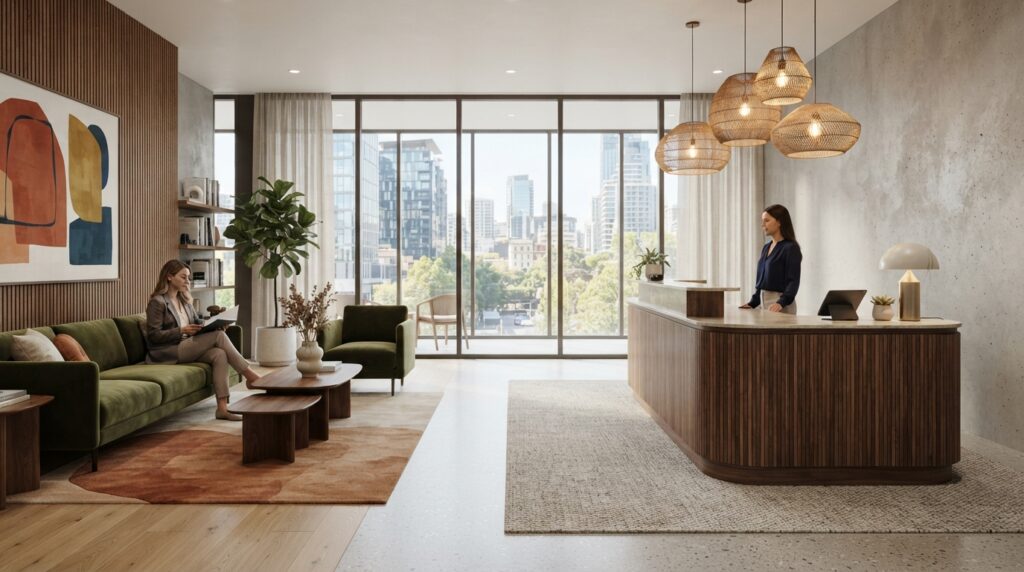
1. The Reception That Sets the Tone
I’ve watched clients decide whether they trust a company within the first ten steps into a lobby. Warm materials, good lighting, and a seat that doesn’t feel clinical it tells a visitor everything before a single word is spoken. I always tell owners to sit in their own reception area for ten minutes before signing off on it, because most never actually have.
2. Open Floor Plans With a Soul
Open offices get blamed for killing focus, but the real problem is usually a big open room decorated like it’s nobody’s job. A little texture, layered lighting, and one unexpected colour move are often all it takes to fix that. The layout was never the issue; the flatness was. For the usual culprits behind a flat office, see these office interior design mistakes that hurt productivity.
3. Executive Offices With Warmth, Not Just Status
I stopped designing corner offices meant to scream authority a while ago. The founders I work with want a room that feels like them, not a hotel suite. A worn leather chair and art they actually chose do more for presence than glass ever did, and it tends to put visitors at ease instead of on edge.
4. Boardrooms Built for Real Conversations
Most boardrooms I inherit feel like interrogation rooms. Warm up the lighting and rethink the seating, and the room where the biggest decisions get made stops feeling like a punishment to sit in. It’s a small shift, but I’ve had clients tell me meetings actually run shorter once the room stops fighting them.
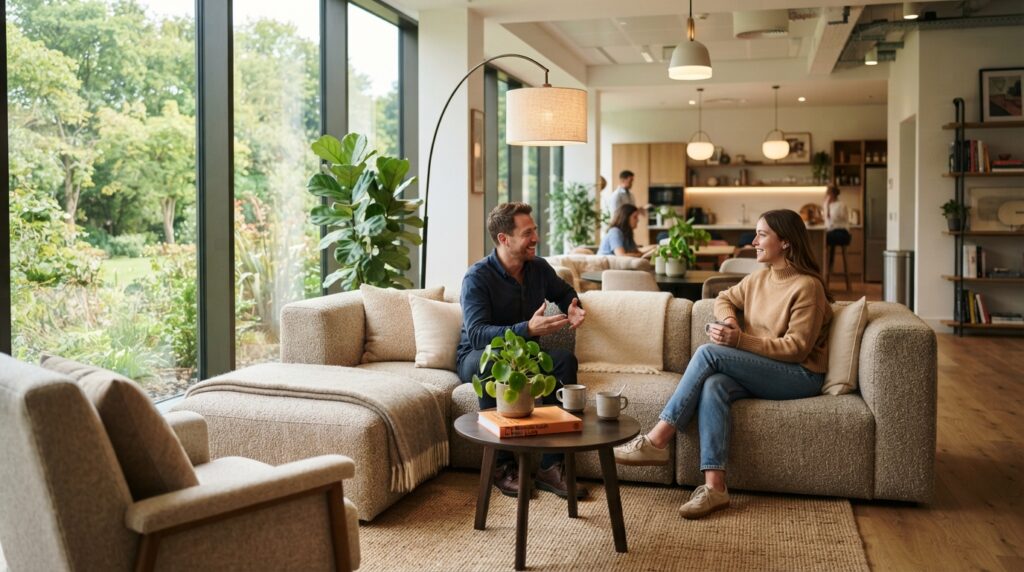
5. Breakout Lounges People Actually Use
I always ask clients the same question: When was the last time someone used your break room by choice, not necessity? This kind of zone planning is usually the very first conversation I have when a business calls about our commercial interior design services, because it tells us so much about how the rest of the office needs to work.
6. Quiet Focus Pods for Deep Work
Not every problem is solved by more collaboration. Some of the calmest teams I’ve designed for have a small, enclosed pod where someone can disappear for an hour and just think – no notifications. It’s often the most fought-over room in the building once people realize it exists.
7. Huddle Rooms for Quick Collaboration
Between the boardroom and the lounge, there’s a smaller room that gets used more than both combined, a space for three or four people to sketch an idea on a whiteboard and walk away twenty minutes later. It works precisely because it isn’t precious about how it gets used.
8. Kitchens and Cafés That Feel Like a Third Space
The best offices I’ve built don’t have a “break room”. They have a small café-style corner; people gravitate toward it the way they would a coffee shop, with real mugs, decent coffee, and a counter tall enough to lean on. It’s usually where the most honest conversations in the building happen.
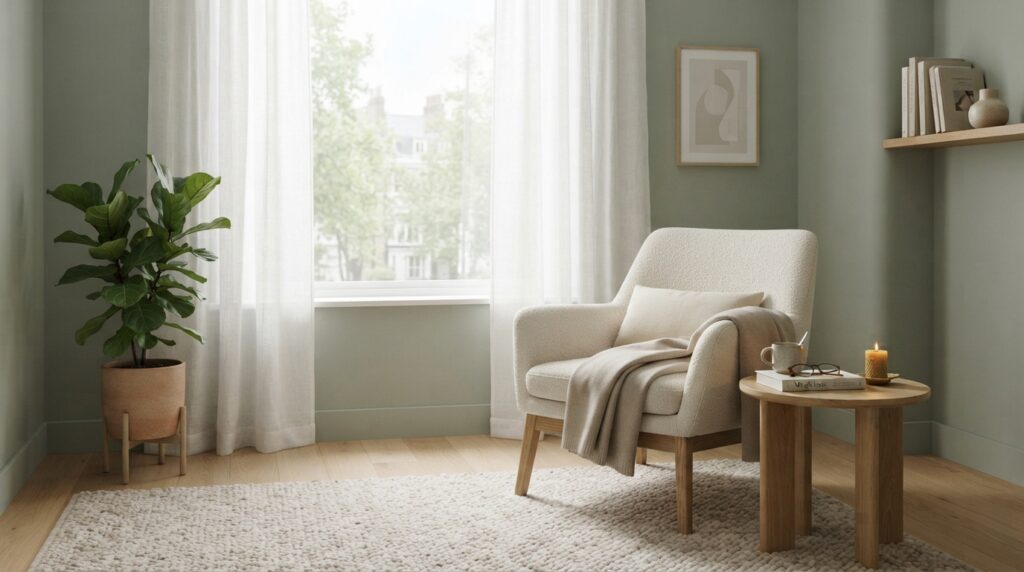
9. Wellness Rooms for Mental Reset
This one gets requested more every year. A quiet room with soft lighting and no screens, for a new parent, someone managing anxiety, or just on a hard day, tells a team their wellbeing matters beyond a poster in the hallway. I’ve had employees tell owners directly that this one room changed how they felt about coming into the office.
10. Biophilic Corners With Real Greenery
Plastic plants are always a tell. Real greenery, even one well-placed tree near a lobby, does something to a room that paint alone never can. It’s one of the smallest changes with the biggest emotional payoff I’ve seen, and it’s usually the first thing people mention when they describe a space as “calm”.
11. Gallery Hallways With Local Art
A hallway is dead space until it holds something worth looking at. Rotating local art turns a walk to the printer into a small moment and tells visitors this company actually belongs to its community rather than just renting space in it.
12. Libraries and Resource Nooks
A small library corner, even five shelves, changes how a space feels. It signals a company that values thinking, not just output. If you’re weighing where to start on changes like this, I put together a complete guide to commercial interior design in Northern Virginia that walks through exactly this kind of planning.
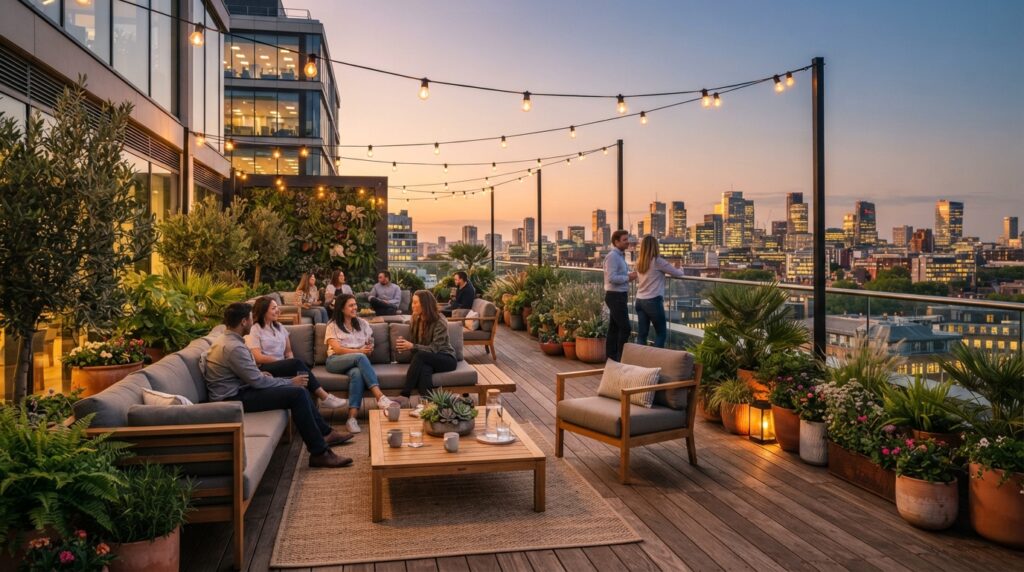
13. Outdoor Terraces and Courtyards
Every office with outdoor access underuses it until someone actually designs it. Real seating and shade turn a terrace into the most requested meeting spot in the building, not just a decorative afterthought, and I’ve seen entire client pitches move outside once the space earns its keep.
14. Flexible Multi-Purpose Event Spaces
A room that folds from all-hands meeting to happy hour to client presentation earns its square footage back many times over. Movable furniture and the right AV setup are what make it feel intentional instead of improvised, which matters more than people expect when clients are watching.
15. Personalized Team Zones With Brand Identity
The offices that stop me in my tracks are the ones where you can tell exactly whose office it is without seeing a logo. That comes from weaving a company’s real story into materials and colour, not slapping a logo on a wall, and it’s the detail clients remember longest after a project wraps.
Conclusion
None of these fifteen locales requires a full gut renovation on its own. Most of the offices I’ve worked on started with just one or two of these: a reception refresh and a real breakout lounge, and the rest followed once the owners saw what it did for how people felt walking in, both employees and clients. You don’t need to fix all fifteen at once to feel the difference. You just need to start with the one your team walks past and feels nothing every single day. If your office is telling a different story than your business actually deserves, reach out to our team and we’ll walk the space with you.
Frequently Asked Questions
It depends heavily on scope. A single-zone refresh, like a reception area or breakout lounge, costs far less than a full office renovation, which is why I usually recommend starting with the one or two locales that will have the biggest impact on how your team and clients experience the space, then expanding from there once you see the results.
The reception area and the breakout lounge are almost always the two I recommend starting with. They’re the spaces people notice fastest, they don’t usually require structural changes, and they tend to shift how both clients and employees feel about the company almost immediately.