Historic homes in Alexandria and Falls Church represent more than architectural beauty — they reflect centuries of design evolution in Northern Virginia. From Federal-style townhouses in Old Town Alexandria to early 20th-century Colonial Revival and Craftsman homes in Falls Church, these properties demand a thoughtful and research-driven design approach.
For homeowners exploring Interior design Alexandria VA services or searching for reliable Falls Church design tips, the challenge is clear: how do you improve comfort and functionality without erasing the details that give the home its identity?
The answer lies in designing with historical awareness.
Understanding the Architectural Story Before Making Design Decisions
Before selecting paint colors or planning renovations, identify your home’s architectural style. Each period carries its own proportions, materials, and design language.
Common architectural styles in Alexandria and Falls Church include:
- Federal (late 1700s–early 1800s) – Symmetrical layouts, refined moldings, fireplace-centered rooms
- Colonial Revival (late 1800s–early 1900s)—Paneled walls, classical columns, formal plans
- Craftsman (early 1900s) – Exposed beams, built-in cabinetry, handcrafted wood details
Designing without acknowledging these foundations often leads to visual inconsistency. Authentic historic interior design VA projects begin with architectural alignment.
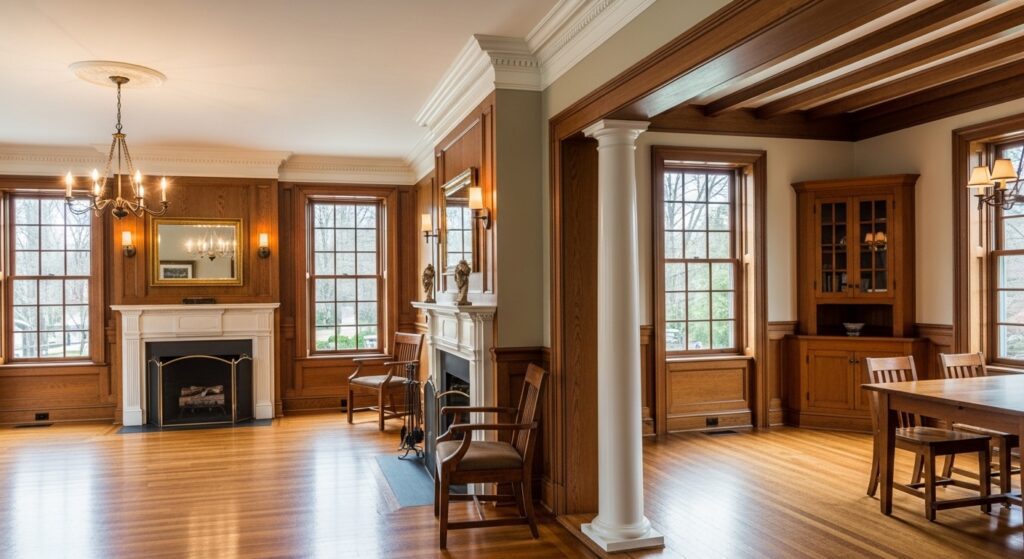
Preservation Is a Design Strategy — Not Just Sentiment
In historic markets like Alexandria, original features are assets. Removing them may simplify renovations, but it weakens architectural authenticity and long-term value.
Elements worth preserving whenever possible:
- Original hardwood or heart pine flooring
- Plaster walls with detailed molding
- Fireplace mantels and surround detailing
- Solid wood doors and vintage hardware
- Built-in cabinetry and millwork
Refinishing, restoring, and repairing these details typically delivers better aesthetic and financial results than replacement. Strong interior design Alexandria VA projects prioritize restoration before reconstruction.
Renovating Kitchens Without Disrupting Architectural Integrity
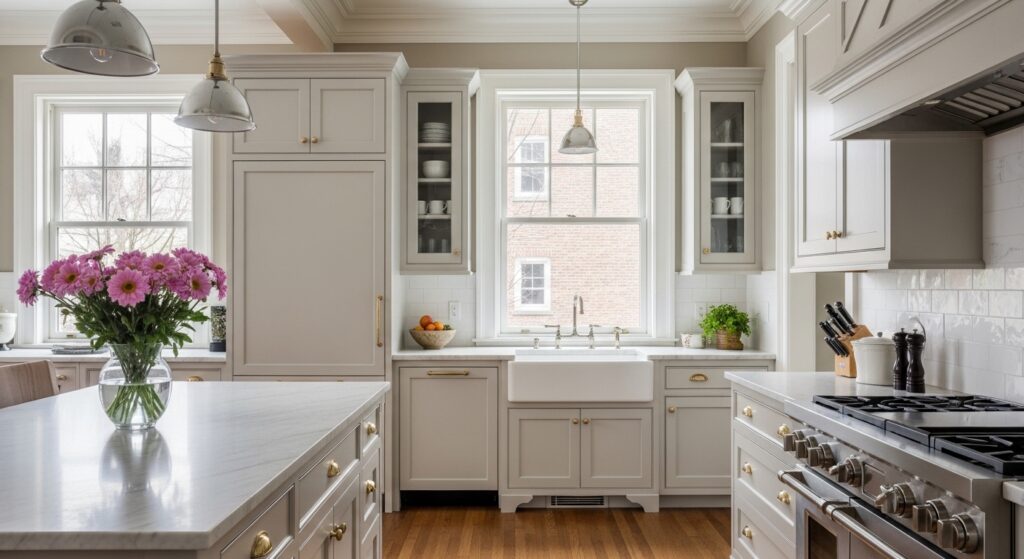
Kitchens often require modernization, but contrast must be handled carefully. Instead of introducing ultra-modern finishes that compete with historic detailing, aim for integration.
When updating a historic kitchen, consider:
- Shaker or inset cabinetry profiles
- Marble or soapstone countertops
- Panel-ready appliances
- Unlacquered brass or polished nickel hardware
- Neutral, historically inspired paint colors
These choices modernize function while maintaining cohesion. Among the most practical Falls Church design tips is to ensure that new materials reflect traditional craftsmanship rather than trend-driven minimalism.
Choosing Paint Colors That Reflect Period Character
Paint selection plays a major role in preserving authenticity. Historically grounded palettes typically include the following:
- Warm creams and soft whites
- Muted sage and olive greens
- Deep navy or slate blue
- Subtle ochre and earth tones
These shades complement natural wood trim and traditional millwork. In narrower Alexandria row houses, lighter neutrals can enhance brightness without sacrificing character.
The key principle: let architecture guide color — not short-term design trends.
Improving Flow While Respecting Original Layouts
Historic homes were designed with defined rooms, and that structure contributes to their charm. While open-concept living is popular, removing walls can disrupt ceiling lines and decorative trim.
Instead, consider subtle adjustments such as:
- Widening doorways while preserving molding
- Installing French doors for light flow
- Creating visual openness without structural removal
- Maintaining original ceiling heights and room proportions
Interior design in Alexandria VA, neighborhoods often succeeds when enhancements feel evolutionary rather than dramatic.
Upgrading Systems Without Compromising Visual Integrity
Modern comfort requires updated systems. However, integration should be discreet.
When modernizing infrastructure:
- Conceal HVAC ductwork where possible
- Use lighting that complements molding profiles
- Install interior storm windows for energy efficiency
- Upgrade insulation without disturbing exterior materials
In well-executed historic interior design VA projects, functionality improves while architecture remains the focal point.
Blending Traditional Architecture with Contemporary Living
Designing a historic home does not mean creating a museum. Instead, aim for thoughtful layering.
A balanced approach may include:
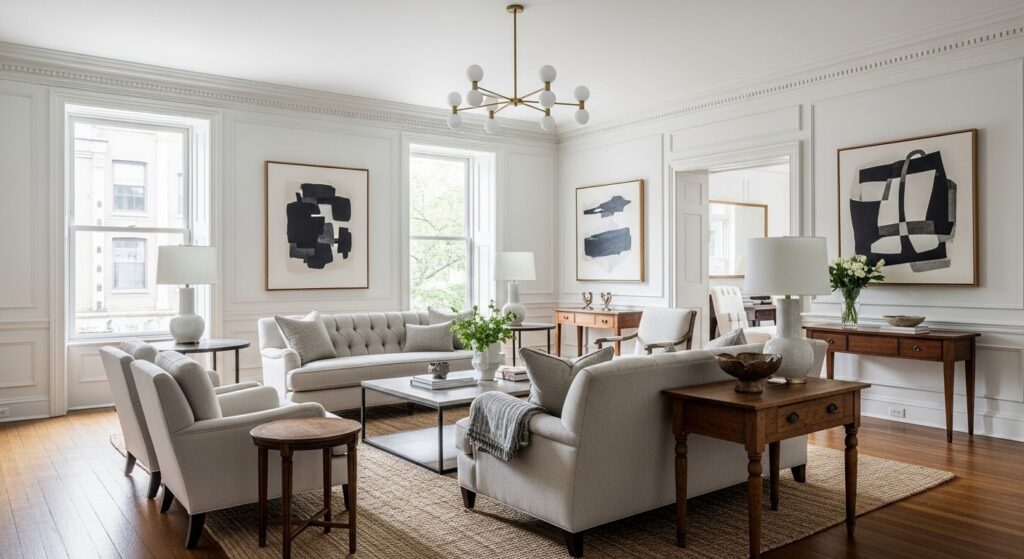
- Traditional furniture silhouettes paired with modern lighting
- Antique wood pieces combined with neutral upholstery
- Contemporary art displayed within classic architectural frames
- Textural layering using linen, wool, and natural fibers
The architecture should lead — furnishings should enhance.
Why Preservation-Focused Design Protects Long-Term Value
Historic homes in Alexandria and Falls Church command premium pricing because they offer architectural distinction that cannot be replicated in new construction.
Design decisions that:
- Maintain original materials
- Respect historical style
- Integrate updates seamlessly
- Avoid trend-heavy alterations
tend to perform better in resale markets over time.
Preservation-led design is not conservative — it is strategic.
Final Thoughts: Designing With Responsibility and Vision
Historic homes carry stories in their brickwork, trim, and craftsmanship. Designing them requires patience, research, and measured restraint.
Whether you are investing in Interior design Alexandria VA, services or implementing refined Falls Church design tips, the guiding principle remains consistent: enhance comfort while protecting identity.
When historic interior design VA projects are approached thoughtfully, they do more than modernize a space — they ensure that Alexandria and Falls Church continue to reflect the architectural character that defines them.