
McLean’s housing stock spans more than a century: 1960s ramblers in Chesterbrook, Federal-era estates along Georgetown Pike, and glass-walled new construction in Langley Forest all sit within a few miles of each other. With the median home price now around $1.4 million and homes averaging just 18 days on market, McLean remains one of Northern Virginia’s most competitive addresses, drawing senior government officials, diplomats, and executives who expect their interiors to match the calibre of the address itself.
That variety is exactly why “one design style” doesn’t work here. The right interior for a Colonial Revival on Chain Bridge Road looks nothing like the right interior for a contemporary estate in Franklin Park, and choosing the wrong one is one of the fastest ways to undercut both daily comfort and resale value.
This guide breaks down the interior design styles & trends working best in McLean homes in 2026, matched to the architecture and neighbourhoods where they actually make sense, along with realistic local budget ranges for achieving each one.
What Makes McLean’s Design Landscape Unique
A few local factors shape which styles succeed here:
- A century of overlapping architecture. Mid-century ramblers, Colonial Revivals, Craftsman-style homes, and brand-new custom estates all coexist, often on the same street.
- Heavy tree canopy and large lots. Many McLean properties back onto wooded acreage or sit near preserved land like Scott’s Run Nature Preserve, which makes indoor-outdoor connection a real design consideration, not just a trend.
- An educated, well-travelled buyer base. McLean residents have easy access to Washington’s museum and gallery culture, and many bring an eye for quality material and original art into how they furnish a home.
- A fast-moving resale market. With homes selling in about 18 days on average, a coherent, well-executed interior can meaningfully affect both showing traffic and final sale price.
The 5 Interior Design Styles Working Best in McLean Homes Right Now
1. Classic Colonial & Federal Traditional
This is the native style of much of McLean’s established housing stock, particularly the brick and stone estates along Georgetown Pike and Chain Bridge Road. Some of the area’s oldest homes, like the historic Salona estate, are true Federal-era houses; far more common are the Colonial Revival homes built throughout the mid-20th century.
- Furniture scaled to formal, high-ceilinged rooms: wingback chairs, substantial case pieces, and upholstery in wool or linen
- Deep, saturated colours (hunter green, navy, warm cream) rather than trend-driven pastels
- Floor-to-ceiling drapery and layered window treatments that suit the proportions of period architecture
- Original art and antiques mixed with quality reproductions, rather than a single matched furniture set
2. Transitional and Modern Heritage
Transitional design is the most broadly applicable style in McLean because it bridges traditional architectural bones with a cleaner, more current sensibility, and it’s the style most buyers respond to in listing photography. It also pairs naturally with the oversized, square-edge baseboards and colour-drenched trim currently trending in renovated homes.
- Warm neutral palettes (greige, warm white, soft taupe) applied consistently across walls and upholstery
- Clean-lined furniture in tactile fabrics: bouclé, performance linen, cashmere blends
- Mixed metal finishes (brass with matte black or brushed nickel with unlacquered brass) used deliberately, not randomly
- One statement lighting moment per room, such as a sculptural chandelier or an oversized linen pendant, carrying the visual interest
3. Contemporary Estate
New construction continues to reshape McLean, particularly in Franklin Park, Langley Forest, and Langley Farms, where older homes are increasingly replaced with architect-designed estates. These builds typically include extensive glazing, open floor plans, and 10- to 12-foot ceilings, which favour a more contemporary interior approach. If you are weighing a more current look, review the key differences between modern and contemporary interior design before you commit.
- Large-format materials, such as polished concrete, honed marble, and book-matched stone, paired with warmer textures like reclaimed oak to avoid a cold feel
- Furniture chosen for comfort as much as form; overly conceptual pieces read poorly in a family home
- Smart-home integration and energy-efficient systems built into the design from the start, not retrofitted
- Chef’s kitchens, spa-style primary baths, and resort-inspired outdoor living spaces, which have become standard expectations in this price tier
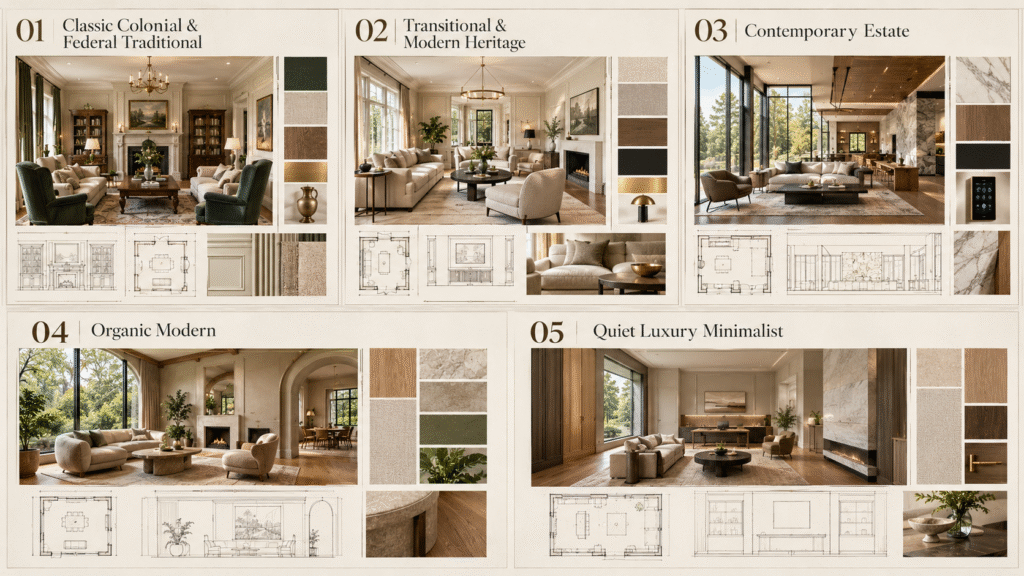
4. Organic Modern
Given how much of McLean sits under mature tree canopy, organic modern design has become a natural extension of contemporary building here rather than a separate trend. It softens the starker edges of new construction while still feeling current.
- Natural materials, including white oak, linen, and raw-edge stone, used throughout rather than as accents
- Window treatments that frame views of the surrounding trees instead of covering them
- Curved furniture silhouettes and arched doorway trim softening the hard angles typical of contemporary builds
- Earth-toned palettes pulled directly from the landscape outside the window
5. Quiet Luxury Minimalist
For McLean’s more private, executive-level buyers, restraint itself has become the design statement: fewer, better pieces rather than visible displays of expense.
- Monochromatic or tonal palettes with minimal contrast between wall, trim, and floor
- Investment-grade materials (solid wood, natural stone, linen) chosen for longevity over novelty
- Minimal visible hardware and storage, keeping surfaces uncluttered
- A small number of considered art or design pieces, rather than dense collections
What These Styles Cost to Achieve in McLean
Renovation costs across Northern Virginia typically run 15 to 25 per cent above national averages, and McLean, along with Great Falls and Vienna, tends to sit at the top of that range given the area’s luxury housing stock. Rough, research-based planning figures for 2026:
- Transitional refresh (paint, updated trim, lighting, hardware): approximately $80 to $120 per square foot for a cosmetic-to-mid-range update
- Traditional restoration (custom millwork, drapery, refinished floors): typically $120 to $180 per square foot, reflecting the higher cost of period-appropriate materials and skilled craftsmanship
- Contemporary estate finish-out (large-format stone, structural glazing, integrated smart-home systems): often $180 to $250-plus per square foot in new construction
- Kitchen renovations: McLean, Great Falls, and Vienna projects frequently exceed $200,000 at the luxury tier, well above the region’s already-elevated $150 to $250 per square foot average
- Bathroom renovations: generally range from $10,000 for a cosmetic update to $50,000-plus for a luxury, spa-style remodel with heated floors and freestanding tubs
Plan for an additional 10 to 20 per cent contingency on top of any of these ranges. Older McLean homes, especially those built before 1980, often reveal electrical or structural surprises once walls open up, and permit timelines vary by jurisdiction within Fairfax County.
Choosing the Right Style for Your McLean Home
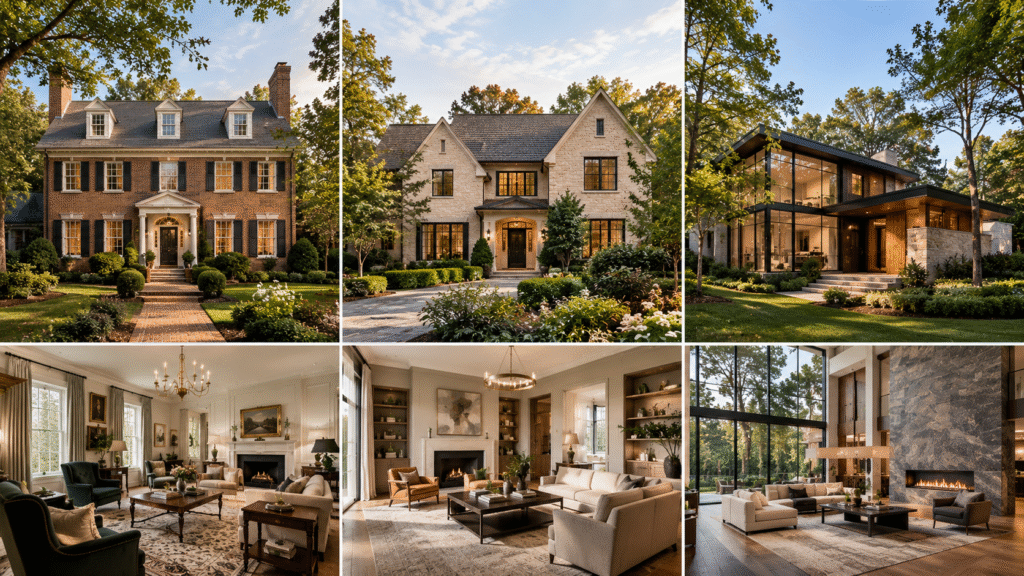
- Start with the architecture, not a mood board. A Georgian or Colonial Revival home with original millwork calls for a traditional or transitional interior; contemporary minimalism will fight the architecture rather than complement it.
- Consider your timeline. If a sale is likely within the next few years, transitional design tends to have the broadest buyer appeal in McLean’s market.
- Match your palette to your lot. Homes on heavily wooded lots generally support warmer, earth-toned schemes better than stark, cool-toned ones.
- Invest in materials over trendy items. McLean’s buyer base tends to notice and value quality construction and finishes more than seasonal decor choices.