
Key Takeaway
- The Virginia kitchens performing best in 2026 aren’t chasing one single look. They’re solving real problems: better storage, appliances suited to how people actually cook, materials chosen for the state’s humidity rather than just for style, and efficiency upgrades that buyers can see and verify.
- Whether that means preserving original character in a Shenandoah farmhouse or fitting out a new build in Loudoun County, the strongest kitchens work with the home’s setting rather than applying the same trend regardless of where the house sits.
Virginia’s housing market kept moving through the middle of 2026, with the statewide median sales price reaching $460,000 in June, up 3.1 per cent from a year earlier, and closed sales running 7.6 per cent ahead of the same month in 2025. Inventory is rising too, up more than 10 per cent year over year, which means buyers have more choices than they did a year ago. In a market like that, the kitchen still tends to be the room that decides whether a home feels finished or feels like a project.
What’s trending in a Williamsburg colonial looks different from what’s trending in a new-construction kitchen in Loudoun County, but a few clear patterns are showing up across the Commonwealth in 2026.
Virginia’s Kitchen Landscape Is Different by Region
A few factors shape which kitchen trends actually make sense depending on where in Virginia you are:
- Historic housing stock is everywhere, not just in Northern Virginia. Colonial and farmhouse-era homes are common from Williamsburg through the Shenandoah Valley, and many renovations involve working around original layouts and structural details rather than starting from a blank slate.
- New construction is concentrated in Northern Virginia. Loudoun, Fairfax, and Prince William counties continue to see steady new-build activity, which supports more contemporary, open-plan kitchen trends.
- Humidity is a real design constraint. Virginia’s humid summers affect material choices in a way drier climates don’t, particularly for solid wood cabinetry and natural stone.
- Renovation costs vary meaningfully by region. Northern Virginia typically runs 15 to 25 per cent above national averages, while much of the rest of the state sits closer to the national baseline.
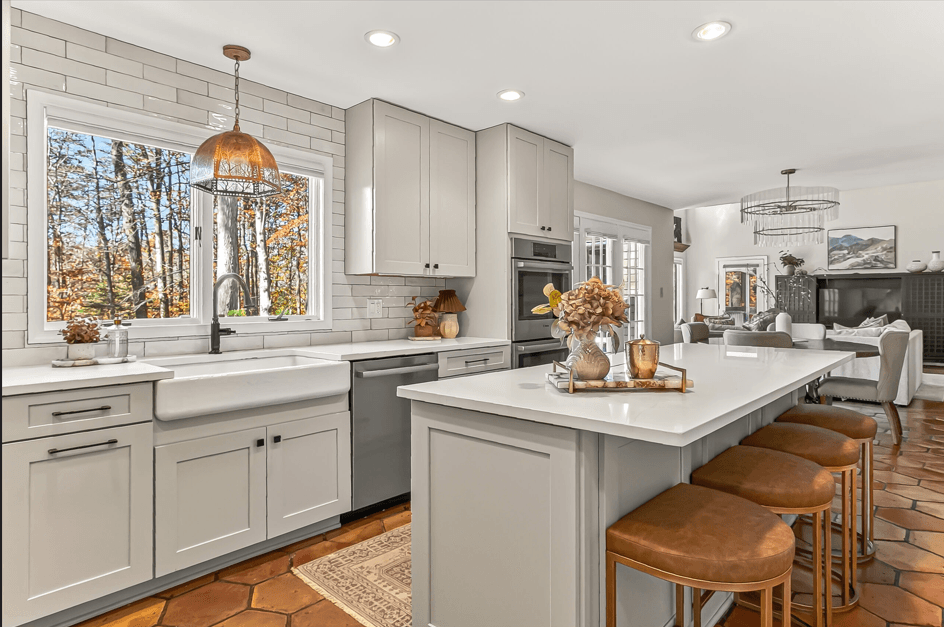
The Kitchen Trends Actually Working in Virginia Homes Right Now
Purpose-Built Storage, in Both Older and Newer Homes
Dedicated storage has become the foundation of most kitchen renovations, regardless of a home’s age. Pantry cabinets, walk-in pantries, and small prep areas are increasingly common asks, and in historic Virginia homes, this often means creative use of adjacent closets, mudrooms, or awkward corners rather than a full structural addition.
Panel-Ready Appliances in Both Historic and Contemporary Kitchens
Refrigerators and dishwashers fronted with matching cabinet panels are showing up in both restoration projects and new builds. In a period home, this approach lets a kitchen keep its historic character while still including modern appliances. In new construction, it supports the clean, uninterrupted look many Northern Virginia buyers are asking for.
Two-Tone Cabinetry, Especially in Character Homes
Two-tone kitchens, typically a richer tone on the island against a lighter perimeter, work particularly well in Virginia’s older homes, where they can echo original wood tones or trim colours already present in the house rather than fighting against them.
Materials That Actually Hold Up to Virginia’s Humidity
This is one of the most overlooked parts of kitchen planning in this region, and it matters more here than in drier climates.
- Solid wood cabinetry needs a proper finish and some seasonal expansion allowance; poorly sealed wood can warp or stick over a Virginia summer
- Engineered quartz holds up better than natural marble in high-humidity kitchens, since it doesn’t require the same ongoing sealing
- Moisture-resistant plywood or MDF substrates, properly sealed, tend to outperform particleboard cabinet boxes over time in this climate
- Good ventilation, both range hood exhaust and general kitchen airflow, matters as much as material choice for keeping humidity issues from developing in the first place
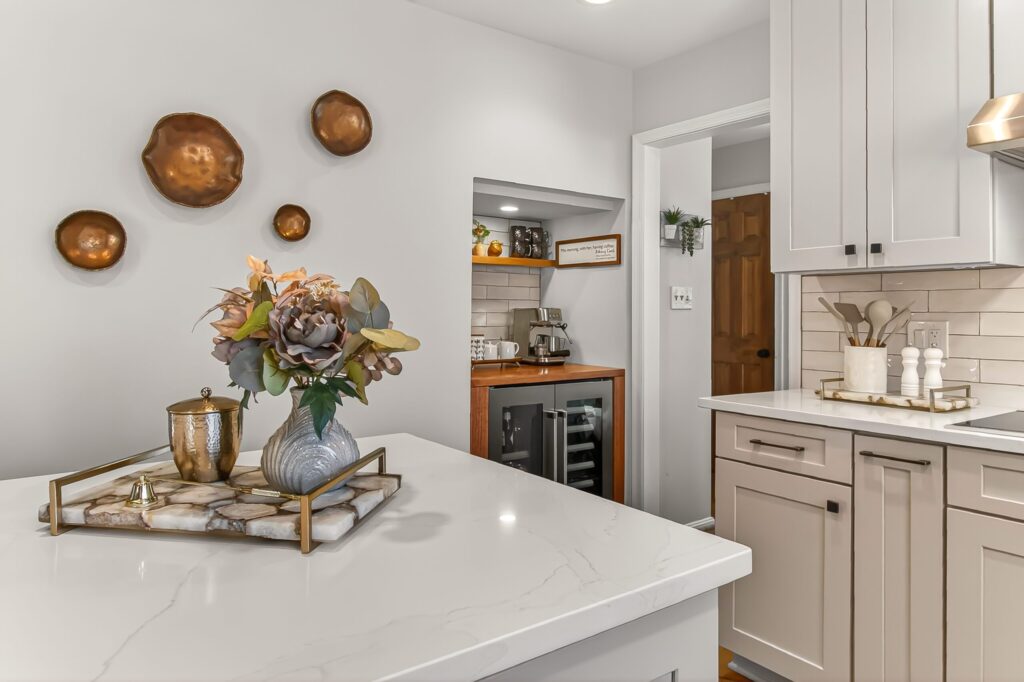
Energy-Efficient Upgrades Buyers Actually Notice
Recent buyer research across the DMV region points to efficiency features as a genuine selling point, not just a nice-to-have. In the kitchen specifically, that translates to:
- Energy-efficient appliances, documented with warranty or purchase records for showings
- LED under-cabinet and overhead lighting
- Smart thermostats and zoned climate control extending into open-plan kitchen and living spaces
- Induction cooktops, which are gaining interest both for efficiency and for reducing kitchen heat load during Virginia’s warmer months
Colour Used as an Accent, Not the Whole Room
In line with the broader 2026 colour shift toward warm neutrals, most Virginia kitchen renovations are keeping cabinetry in warm, muted tones and saving bolder colour, deep greens, warm terracotta, or a soft khaki, for an island, a backsplash, or open shelving rather than the full kitchen.
What Buyers Are Actually Looking For in Virginia Kitchens in 2026
With inventory rising statewide, homes with updated, functional kitchens are standing out more, not less.
- Virginia remains a seller-favouring market overall, but the gap is narrowing as more listings come online
- Buyers across the DMV region consistently prioritise kitchens, flexible living space, and visible efficiency upgrades when comparing similar listings
- A dated kitchen is increasingly a negotiating point in a market where buyers have more options than they did a year or two ago
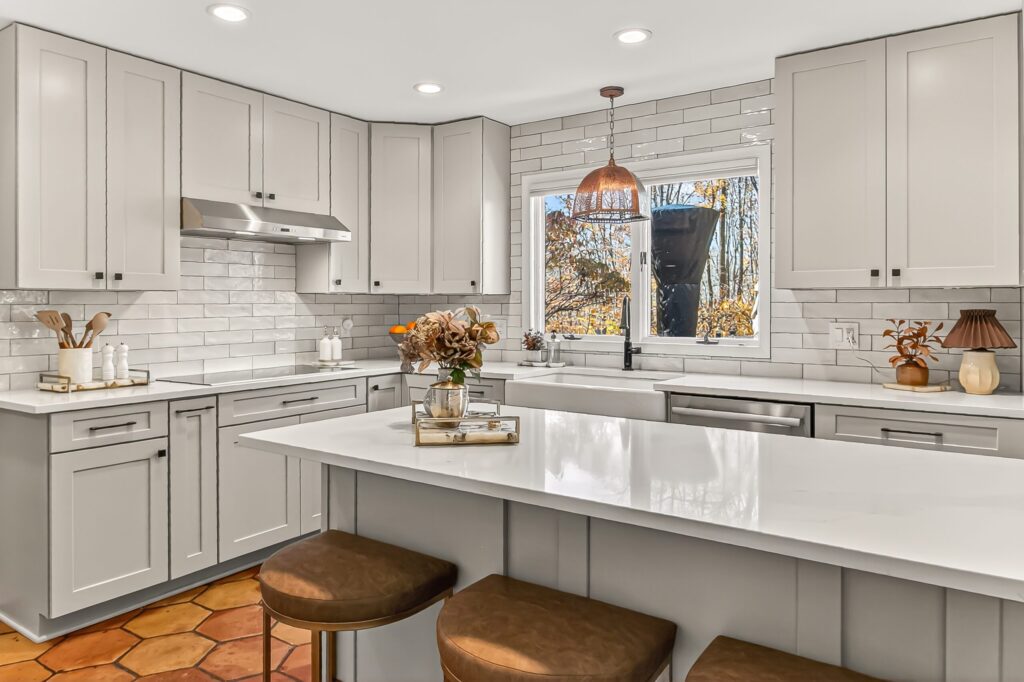
What These Upgrades Cost Across Virginia
Renovation costs vary significantly depending on where in the state you’re working. Before you set a budget, review these questions to ask an interior designer before a kitchen renovation.
- Northern Virginia (Fairfax, Loudoun, Arlington, Alexandria): typically $150 to $250 per square foot, reflecting the region’s 15 to 25 per cent premium over national averages
- Rest of Virginia (Richmond, Charlottesville, Hampton Roads, and beyond): generally $100 to $180 per square foot, closer to national baseline pricing
- Cosmetic refresh (cabinet painting or refacing, new hardware, countertops): roughly $15,000 to $35,000 statewide, trending toward the higher end in Northern Virginia
- Full remodel (new cabinetry, layout changes, updated appliances): roughly $45,000 to $95,000, with Northern Virginia projects often landing at the top of that range or above
- Luxury renovation (custom cabinetry, premium appliances, full design services): $150,000 and up, most common in Northern Virginia’s higher-end markets
Want more research-backed design guidance like this? Visit OUR-WEBSITE for our full library of interior design guides and the best interior design styles for McLean, Virginia, homes.
Frequently Asked Questions
Buyers across Virginia are prioritizing updated storage, energy-efficient appliances and lighting, and kitchens that feel move-in ready, with Northern Virginia buyers specifically responding well to panel-ready appliances and open, flexible layouts.
Yes, significantly. Northern Virginia typically runs $150 to $250 per square foot, 15 to 25 per cent above national averages, while the rest of the state generally falls between $100 and $180 per square foot.