
Almost every home office consultation I do starts with the same question, before we talk about layout, before we talk about finishes: what is this actually going to cost me? It’s a fair question, and it’s usually impossible to answer accurately with a single number, because “home office” can mean anything from a corner with a new desk to a fully converted room with custom built-ins and an addition. Costs also shift depending on where in VA you’re building, older homes in established neighbourhoods often need more electrical and structural work than newer construction. Here’s the real breakdown I walk VA clients through, cost by scope, by room type, and by the individual line items that tend to move a budget the most.
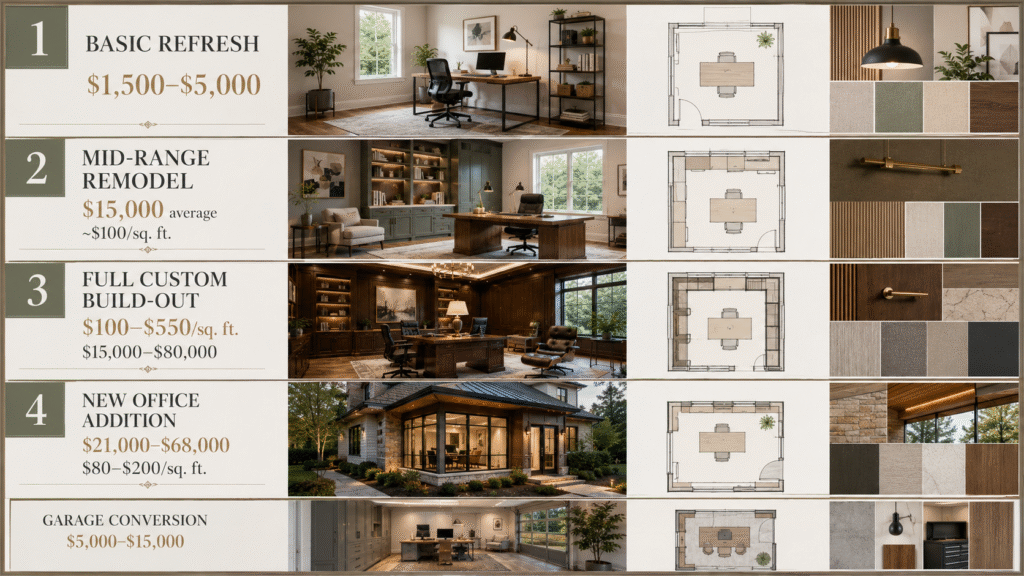
Quick Cost Overview
- Basic refresh (paint, lighting, furniture, no structural work): $1,500–$5,000
- Mid-range remodel (built-ins, flooring, electrical upgrades, professional design): $15,000 average, or roughly $100 per square foot
- Full custom build-out (premium finishes, custom millwork, structural changes): $100–$550 per square foot, or $15,000–$80,000 total depending on scope
- Garage conversion into a home office: $5,000–$15,000
- New room addition for a dedicated office: $21,000–$68,000, or $80–$200 per square foot
What Actually Drives the Cost Up or Down
A handful of factors decide where your project lands within these ranges:
- Room size: A small home office (around 70 square feet) costs far less than a larger 150-square-foot room built for meetings and storage.
- Structural changes: Converting an unfinished basement or garage adds framing, insulation, and wall costs, typically $900–$2,600 just for enclosing the space.
- Custom built-ins: Built-in shelving averages around $2,500, and custom millwork can push that higher depending on materials.
- Flooring choice: Budget vinyl or concrete runs $2–$7 per square foot, while hardwood or premium flooring can reach $10–$15 per square foot.
- Electrical and lighting: Adding dedicated circuits, recessed lighting, or extra outlets for a home office setup is one of the most commonly underestimated line items in a budget.
- Permits: Most VA jurisdictions require permits for structural or electrical work, typically $380–$1,900 depending on scope.
Current design trends also nudge costs up or down more than people expect. A lot of the same shifts happening in commercial spaces, like biophilic elements, warmer natural materials, and better acoustic control, are showing up in home offices too, and I broke down what’s actually driving those choices in top office interior trends shaping VA workspaces for 2026, which is worth a look if you want your home office to feel current rather than dated in a year or two.
Small Refresh vs. Full Room Conversion vs. Addition
I usually walk clients through three tiers, since “home office” rarely means the same thing twice:
A small refresh works well if you already have a usable room and just need it to function and feel better: new furniture, better lighting, a coat of paint, and maybe a small built-in. This is the fastest and least disruptive option, and it’s where most of my VA clients actually start, especially first-time home office owners who aren’t sure yet how much space they’ll actually need.
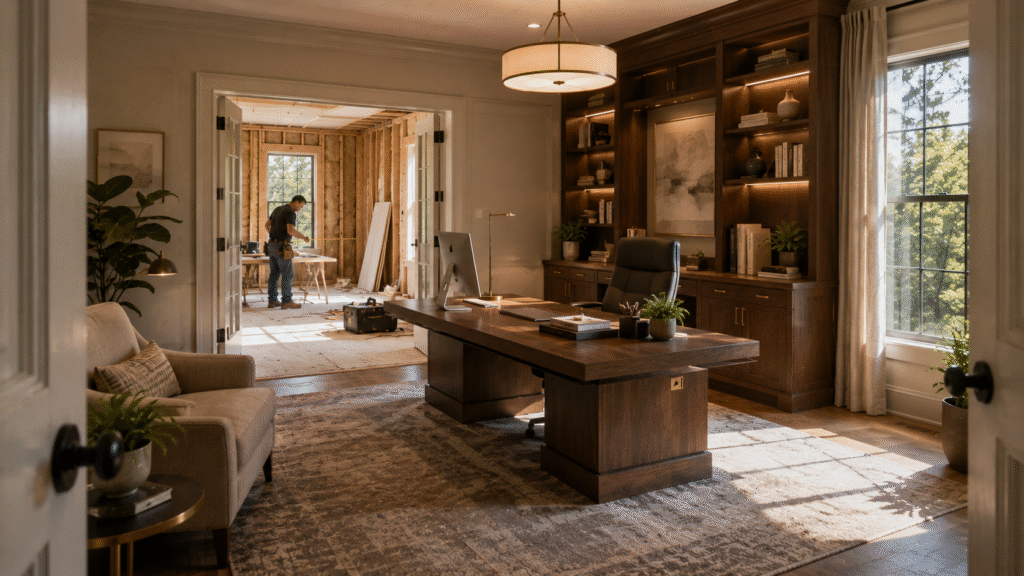
A full room conversion turns an existing space, a spare bedroom, a basement corner, or an underused dining room, into a dedicated, well-designed office. Hiring a contractor for this kind of renovation in an existing space averages around $4,000 before design and furnishing costs are added on top. This tier is where most of the real transformation happens, since it usually includes proper lighting, storage, and at least one custom element.
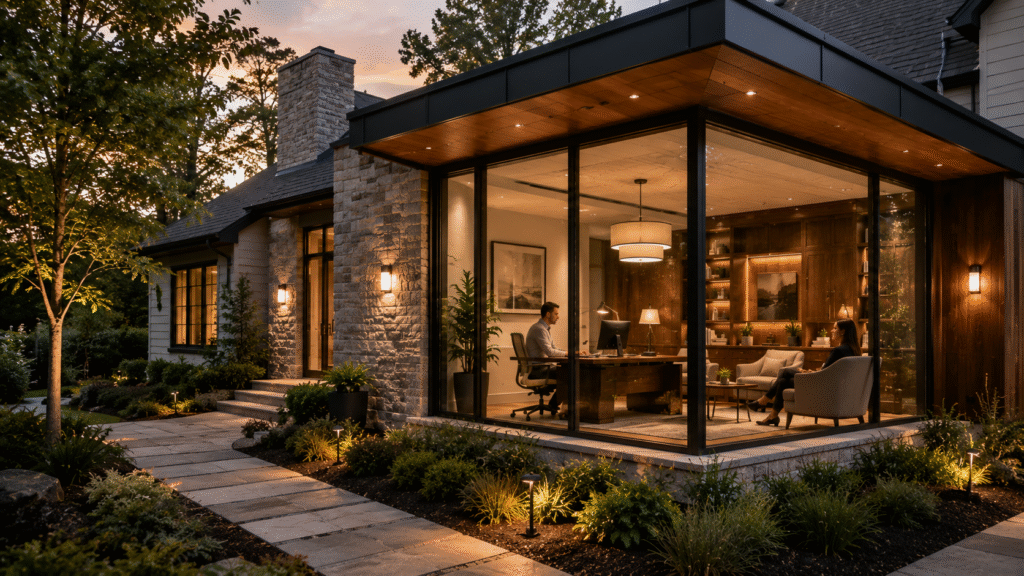
A dedicated addition makes sense when there’s no existing room to repurpose and the home office needs to feel fully separate from the rest of the house, especially for anyone meeting clients regularly. This is the most expensive route, but it’s also the one that adds the most resale value when done well, since a true dedicated office is increasingly something VA homebuyers are asking for directly.
Is Hiring a Professional Designer Worth the Cost?
I’ll be honest about this one, since it’s easy for a designer to say yes reflexively. For a basic refresh, you probably don’t need one. For anything involving built-ins, electrical work, or a full room conversion, a professional design plan almost always saves money in the long run by preventing costly mid-project changes, mismatched finishes, or furniture that doesn’t actually fit the space once it arrives. I’ve walked into more than a few DIY home offices where the desk was ordered before the electrical outlets were mapped, which usually means an expensive rework down the line. If you decide to bring someone in, here is how to hire an interior designer consultant in Virginia without overpaying or skipping the right questions.
How to Keep Costs Down Without Cutting Corners
A few things I recommend on almost every budget-conscious project:
- Repurpose an existing room instead of building an addition wherever possible
- Choose one or two “splurge” items (a great desk, statement lighting) and keep everything else simple
- Prioritize electrical and built-ins early, since retrofitting them later almost always costs more
- Get multiple contractor quotes before committing to structural work
The Bottom Line
Most VA homeowners land somewhere between a basic refresh and a mid-range remodel, not a full custom build-out, and that’s usually the right call unless you’re meeting clients at home regularly. Start with what the space actually needs to function well, then decide how much of the remaining budget goes toward how it looks. The offices that end up feeling worth the investment are rarely the most expensive ones, they’re the ones where the budget was spent on the right things in the right order.