
A designer usually knows more about a home in the first sixty seconds than most clients expect. Not because we’re reading minds, but because a house communicates constantly, through wear patterns, empty walls, and the gap between the rooms that look staged and the ones that actually get used. Across McLean, Great Falls, and the rest of Northern Virginia, a few signals show up again and again. Here’s what they actually mean and what they suggest about where to start a redesign.
Why First Impressions Matter in Interior Design
Before a design conversation even begins, a home has usually already answered the most important questions: how a family really lives, which rooms carry the emotional weight of the house, and where the gap sits between the life a homeowner is presenting and the life they’re actually living. Reading these signals accurately is often what separates a design that gets used from one that just gets photographed.
What the Entryway Reveals
The entryway is usually the most honest room in the house, whether it means to be or not.
- A console table with a single curated object and nothing else often signals a homeowner performing a version of the house for guests
- A pile of shoes, an overloaded coat hook, and stacked mail signal a family that’s stopped pretending the entry needs to look staged
- Neither is wrong, but the gap between the two tells a designer whether the priority is a home that photographs well or one that functions well for daily life
What the Walls Say (and Don’t Say)
Bare walls read differently depending on context.
- In a recently purchased home, empty walls usually just mean the art hasn’t caught up with the move yet
- In a long-lived home, empty walls or art still leaning against a baseboard often signal reluctance to commit to a final decision
- In Northern Virginia specifically, where homes have sold in as little as eighteen days on average in recent market data, some homeowners unconsciously decorate with the next buyer in mind rather than themselves, favouring the safest possible neutral over anything more personal
What Furniture Wear Patterns Reveal
Ask a homeowner which room they spend the most time in, then look at the furniture. The two don’t always match.
- A pristine, unworn formal living room next to a permanently dented family room sofa tells the real story better than any conversation could
- This is especially common in Northern Virginia’s older Colonial-style homes, which were frequently built with a formal living and dining room whether or not a family actually uses them that way
- When this gap shows up, the better investment is usually the room people actually use, not the one currently getting the most decorating attention
“Everything Matches” vs. “Collected Over Time”
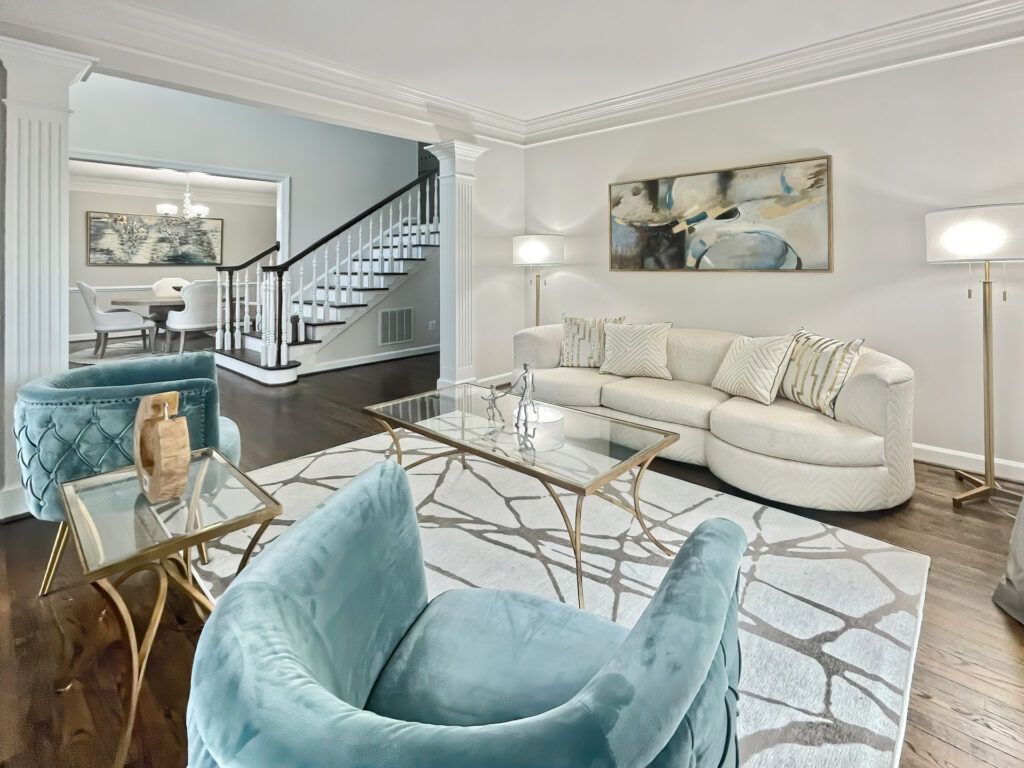
- Furniture that all arrived at once, from a single source, in one style, often signals a recent move or a cautious, still-forming design identity
- Homes that feel most resolved are usually the ones that were collected rather than purchased in a single pass, mixing a vintage piece with something new, or a family heirloom with a recent find
- A client who wants their home to feel “collected” is often ready for a home that reflects genuine confidence in their own taste, not a formula
The Untouched Room
Almost every larger Northern Virginia home has one: a home office that’s become storage, a formal dining room used twice a year, a bonus room nobody quite decided what to do with. If yours is that room, see what turning a spare room into a home office in Virginia actually costs.
- These rooms are rarely a mystery once you’re standing in them, and homeowners often apologise for them unprompted on a first walkthrough
- The apology is useful information: it usually means the room was designed around an assumption (more entertaining, more in-office work) that didn’t match how life actually unfolded
- The fix is rarely more furniture. It’s usually rethinking what the room is actually for, based on the family in front of the designer, not the family the house was originally built to imagine
What This Means When You’re Ready to Redesign
None of this is about judgement. A designer walking through a home is gathering information, the same way a doctor reads symptoms, to understand what’s happening before recommending anything. The homes that turn out best aren’t the ones that already looked perfect. They’re the ones where the homeowner was honest about the gap between the house they have and the house they actually want to live in. For the designer’s side of the same walkthrough, read an interior designer’s perspective on your Virginia home.
Frequently Asked Questions
A designer can typically identify daily traffic patterns, which rooms are genuinely used versus staged for appearance, and whether a home reflects the owner’s actual taste or a more cautious, resale-driven approach, often within the first few minutes of a walkthrough.
Many older Colonial-style homes in the region were built with a formal living and dining room as a standard architectural feature, regardless of how a specific family actually planned to use the space, which often results in a beautifully finished room that sees little daily use.
No. A designer benefits far more from seeing a home exactly as it’s actually lived in, including the rooms and habits a homeowner might be tempted to hide, since that honesty is what leads to a design that truly fits daily life.